Fascisterne Explained: History, Meaning, and Why It Still Matters
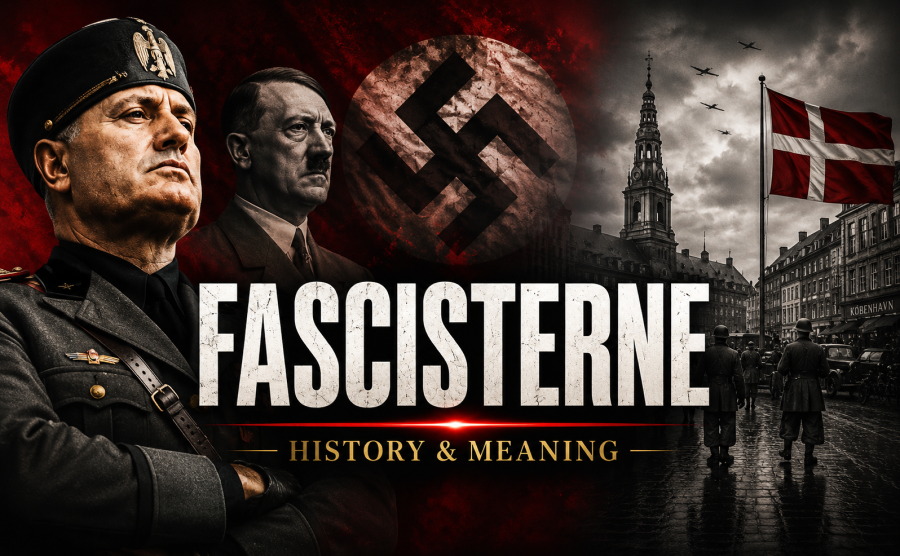
Danish tacks “-erne” onto a noun to make it a definite plural. So fascist becomes fascisterne — “the fascists,” basically. That’s the whole grammar lesson. Nobody’s really searching this to learn Danish suffixes though, they want to know what the word’s actually referring to.
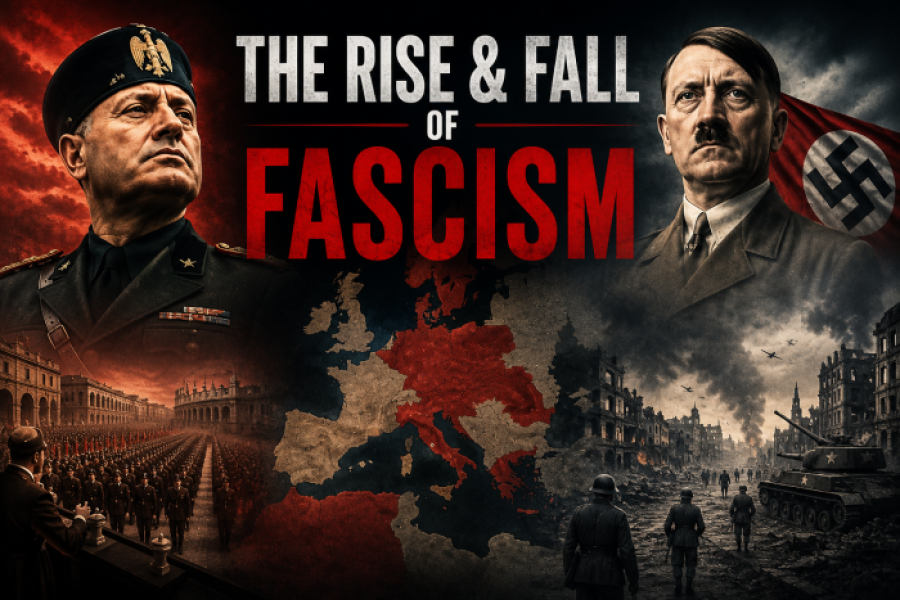
It’s referring to fascism the authoritarian politics that swept parts of Europe in the 1920s and 30s. One leader in charge, barely any tolerance for pushback, and nationalism cranked way up. Mussolini kicked the whole thing off in Italy in 1919 and had control of the country by 1922. Hitler followed in Germany in 1933. Denmark got occupied in 1940. By 1945 it had all fallen apart. These days the word mostly shows up in Danish classrooms and news pieces rather than actual politics, but it hasn’t disappeared.
Quick Answer
Fascisterne is just Danish for “the fascists” – tied to the fascist movement that ran across Europe from roughly the 1920s to 1945, with Mussolini and Hitler as the two names everyone remembers. Authoritarian rule, nationalism, one party calling all the shots. That’s the core of it. People bring the word up now mostly to point at what happens when nobody’s checking a leader’s power.
A Short Timeline of Fascisterne
1919, Mussolini gets the Fascist movement going in Italy. 1922, he takes over after marching on Rome. Hitler becomes Chancellor in 1933. Germany occupies Denmark in 1940. War ends in 1945 and the fascist governments come apart. After that, it’s mostly a history-book word.
What Is Fascism?
Short version — one leader, one party, not much space to disagree. Democracies spread power out: elected officials, courts that don’t answer to the leader, a press that can say what it wants without getting shut down. Fascism does the reverse. Everything gets pulled toward one person or one party until voting stops meaning much and papers print whatever they’re told to.
And look, the people who supported this stuff weren’t villains twirling mustaches. A lot of them were just worn out — inflation, governments collapsing every few months, that sense that nobody’s steering the ship. Someone comes along promising order and a bit of pride in the country, and honestly, that’s an easy sell when things are falling apart. Which is the uncomfortable bit of all this. Nobody forced it on these countries from outside. People voted for it.
The bill came due fast though censorship, secret police, eventually a continent at war.
Where Did Fascism Begin?
Italy, right after World War I. The country came out of that war broke, with a lot of people feeling cheated – they’d fought on the winning side and still felt like they got nothing for it.
Mussolini read that mood correctly in 1919 and built a movement out of it. Three years on, he marched on Rome and basically took the government. Mid-1920s, Italy’s gone from a wobbly parliamentary democracy to a one-man dictatorship, and other countries are paying attention.
Why Did Fascisterne Gain Support?
No single cause here, more a pile-up of things.
Money was tight nearly everywhere inflation, unemployment, savings gone, the kind of pain that makes extreme promises sound reasonable. Governments kept falling apart too, coalition after coalition, until people just wanted someone who’d make a call and stick with it.
There was wounded pride mixed in as well. A bunch of countries felt humiliated by how the war ended, and fascist leaders promised to fix that. And then there’s the fear factor communism wasn’t some abstract idea after 1917, it had already happened in Russia, and plenty of business owners and middle-class families saw fascist parties as the safer bet against that spreading.
Any one of these alone probably wouldn’t have done it. All of them together, though, opened the door.
The Core Beliefs of Fascisterne
Every country’s flavor of this was a bit different, but some ideas repeat. One leader above parliament, above the courts, above the party final say on the big stuff. National identity pushed hard, sometimes to the point of glorifying a past that didn’t quite exist. Criticism and a free press dialed back, sometimes gradually, sometimes overnight. The state showing up in daily life more than people were used to. And political rivals stopped being just rivals – they became enemies of the nation, which made cracking down on them feel justified to a lot of supporters.
Fascisterne in Denmark
Everyone thinks Italy and Germany when this topic comes up, but Denmark had its own thing going too – DNSAP, the Danish National Socialist Workers’ Party, which took a lot of cues from Nazi Germany right next door.
It never got anywhere though. Danes mostly stuck with the regular democratic parties all through the 1930s, and DNSAP stayed a fringe operation. Then Germany occupied the country in 1940 regardless of what anyone had voted for, and a lot of people who’d never cared much about politics before ended up in the resistance instead. It’s a moment Danish history keeps circling back to.
Fascisterne During World War II
Once these governments started expanding by force instead of politics, the toll got brutal fast – millions of people lost homes, families, lives. Food shortages, censorship, forced labor, tighter control everywhere you looked.
Denmark went through occupation too, but plenty of ordinary Danes took real risks protecting people and backing the resistance. It’s remembered now as a quieter kind of courage.
Fascism vs Democracy
Line the two up and they barely overlap. Fascism runs on one powerful leader; democracy runs on people who got voted in and can get voted out. Fascism clamps down on political freedom and treats opposition like a threat; democracy leans on free speech and just expects people to disagree sometimes.Fascist governments control the media, while democratic governments protect press freedom and citizens’ legal rights.
That gap is a big part of why so many countries toughened up their institutions after the war.
Fascism vs Nazism: Are They the Same?
People lump these together all the time, but they’re not identical. Fascism started in Italy under Mussolini, mostly about state power and nationalism. Nazism came out of Germany under Hitler, carried a lot of the same DNA, but bolted on a racial ideology that wasn’t really at the center of Mussolini’s project. Race wasn’t the core idea in Italy — it became the defining one in Nazi Germany. Historians usually call these cousins, not twins.
Common Symbols Linked to Fascisterne
A few visuals keep showing up whenever this comes up: the fasces (rods bundled around an axe – where the word “fascism” actually comes from), the black shirts Mussolini’s people wore, the stiff-armed salute, plus flag-heavy military parades built to stir up loyalty. None of it gets celebrated now. It’s studied, not admired.
Why Historians Still Study Fascisterne
Eighty-plus years on and people are still writing about this. A few reasons, honestly. New material keeps surfacing diaries, letters, government files getting declassified or translated decades later. There’s practical value too, understanding how a democracy slides into authoritarianism under pressure isn’t just trivia. And there’s something owed here as well remembering what got lost feels less like homework and more like an obligation.
Lessons Modern Democracies Have Learned
A handful of principles came out of this that most democracies treat as non-negotiable now. A free press that can push back without being shut down. Legal protection that applies to everyone, not just people with connections. Elections on a fixed schedule, not whenever it’s convenient for whoever’s in power. Courts and parliaments strong enough to stop any one person from grabbing too much. None of that was guaranteed before the war — after it, it became the baseline.
Common Myths About Fascisterne
People assume it only happened in Italy. It didn’t Germany, Spain, Hungary, Romania, and smaller movements all over Europe had their own versions, Denmark included.
People also figure every country just went along with it. Plenty didn’t, and resistance movements popped up almost everywhere this spread.
Some think it’s ancient history at this point. Fine, the regimes ended in 1945, but the underlying questions — how much power one person should hold, how fragile institutions get under strain those didn’t go anywhere.
And no, fascism and democracy aren’t just two flavors of the same thing. One protects your ability to vote someone out. The other exists to make sure you can’t.
Why Fascisterne Still Matters Today
Schools and museums keep circling back to this because it’s a real case study in how fear and economic pain turn into support for authoritarian rule. Recognizing that pattern matters — it’s part of what keeps a democracy paying attention to its own institutions instead of just assuming they’ll hold up on their own.
Key Facts About Fascisterne
Quick recap for anyone who jumped straight here: fascisterne is Danish for “the fascists,” tied to a movement Mussolini started in Italy in the early 1900s. It stood for authoritarian, one-party rule and had no interest in democratic competition. Denmark had its own party in DNSAP, though it never got near real power. The whole thing became central to World War II, and people study it now mostly for what it says about how democracies hold up under pressure.
Frequently Asked Questions
What does fascisterne mean, exactly? Danish for “the fascists” — people or groups tied to fascist politics.
Who actually started fascism? Mussolini, in Italy, right after World War I.
Did Denmark have fascisterne of its own? Yes, but nowhere near real power — DNSAP stayed minor even while occupation happened anyway in 1940.
Is fascism just another word for Nazism? Not quite. Plenty of overlap, but Nazism added a racial ideology that wasn’t central to the original Italian version.
Why does this still come up? Because the conditions that let it happen – fear, economic pain, weak institutions — didn’t stay in the past.
Final Thoughts
Fascisterne is a small word carrying a heavy piece of history. What started as one man’s movement in a broke, exhausted postwar Italy ended up reshaping Europe and costing millions of lives, and it left behind lessons that still shape how modern democracies think about courts, elections, and a free press. Denmark’s own story adds something too – the country mostly rejected fascism at the ballot box and still ended up occupied anyway, which is a fair reminder that democratic values don’t defend themselves. That part’s on people.
Share this content:










Post Comment