Pulsamento: Meaning, Rhythm, Uses & Why It Matters
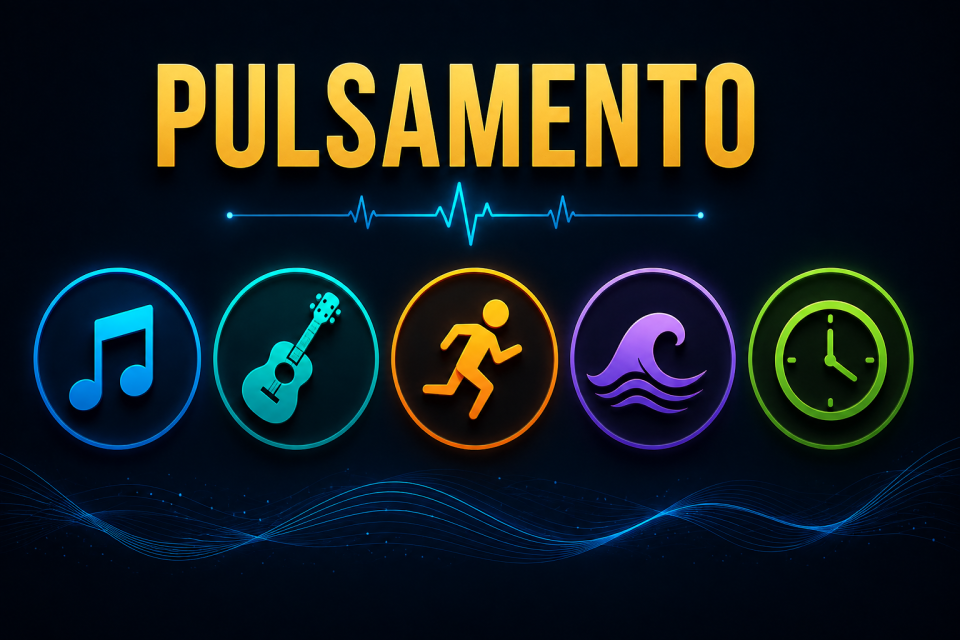
Pulsamento is a concept closely connected with pulse, rhythm, and continuous movement. In music, it can describe the underlying flow that keeps a performance connected, while broader uses relate to repetition, timing, and rhythmic patterns.
However, the meaning can vary depending on the context. Some sources connect it specifically with music and guitar, whereas others use it more broadly for movement and flow. In this guide, we’ll explore its meaning, musical connection, related concepts, and practical examples in simple terms.
What Is Pulsamento?
Pulsamento broadly refers to a pulse, pulsation, rhythmic movement, or a recurring flow. For example, when you tap your foot along with a song, you may naturally follow its underlying beat without consciously counting every moment. That instinctive sense of timing helps explain the idea behind the term.
The concept also extends beyond music. Your heartbeat follows a recurring pattern, breathing moves through natural cycles, and waves repeatedly rise and fall. Likewise, a clock moves through predictable intervals. These examples are not formal definitions; instead, they illustrate the central idea of repetition shaped by timing.
In music, the term is generally connected with the pulse that helps a performance maintain continuity. Additionally, some sources use it in guitar contexts to describe repeated or alternating finger movements that create a smooth, flowing rhythmic feel.
Understanding the Core Idea
Short version:
A repeating pulse or rhythmic flow that gives something its movement, timing, and continuity.
Kept vague on purpose, because the word does different jobs in different places.
A few examples —
Music: the underlying pulse or feel.
Guitar: a controlled pulsing or plucking style.
Movement: motion that keeps recurring.
Everyday speech: a metaphor for cycles and patterns.
Creative work: the sense of timing that makes something feel alive.
The one thing to hold onto — it’s not just repetition. It’s repetition with timing and movement baked in.
Where Does the Word Pulsamento Come From?
Most online sources trace it back to Romance-language roots connected to pulsing or beating. The Latin verb pulsare sits behind it — meaning to strike or beat — which explains why the modern word keeps circling back to pulse and rhythm.
Worth being careful here though. Pulsamento isn’t a standardized English technical term. Its meaning shifts depending on where you find it, and several sources openly call it a niche or specialist word rather than an established one.
That distinction matters. It stops one website’s take from getting mistaken for the official definition.
Pulsamento in Music
Music makes this easiest to see.
Every performance runs on some kind of timing. Musicians hold a steady pulse, and melody, chords, percussion, and vocals build their own layers on top of it.
For a listener, that pulse is usually felt, not analyzed. Foot tapping, head nodding, or just knowing when the next strong beat is coming — that’s the pulse doing its job.
So Pulsamento, in this sense, is the felt continuity of a musical pulse.
It shows up in:
Timing
Coordination
Musical flow
Rhythmic stability
Expressive movement
A song can get rhythmically complicated and still feel organized, because listeners can sense the structure running underneath.
Pulsamento vs. Beat, Rhythm, and Tempo
Part of the confusion is that this word overlaps with terms people already know.
| Term | Simple meaning | Main role |
|---|---|---|
| Pulsamento | A pulse or rhythmic flow | Gives a sense of continuous movement |
| Beat | A regular unit of musical time | Provides countable timing |
| Rhythm | A pattern of sounds and silences | Creates variation |
| Tempo | The speed of the pulse | Determines how fast or slow music feels |
| Meter | The organization of beats into groups | Creates the framework of timing |
Related, not interchangeable.
Count 1-2-3-4 on loop — that’s pulse. Speed it up or slow it down — tempo changed. Rearrange notes and rests across the same count — now you’ve got rhythm.
Pulsamento sits above all that — the broader felt flow connecting the pieces, not a replacement word for “rhythm.”
Pulsamento and Guitar Playing
Guitar is where the word gets its sharpest, most specific use.
Some music sources describe pulsamento as a controlled plucking or pulsing technique — mostly in classical, Spanish, flamenco-adjacent, and fingerstyle guitar. It’s built on consistent movement, tone, timing, and expression, not speed.
Think repeated finger patterns, arpeggios, alternating strokes, rhythmic chord work.
Speed isn’t really the point.
What the player’s actually chasing:
Even movement
Control
Rhythm
Expression
Consistent tone
Which is why people describe guitar Pulsamento as rhythm plus touch, not just fast fingers.
How Pulsamento Works in Guitar Technique
Say a guitarist’s running a pattern across several strings.
Instead of treating each note like its own separate event, the notes get strung into one continuous movement. Right hand keeps a predictable cycle running. Left hand handles the chords or melodic shapes.
A basic drill: alternate fingers over a repeating string sequence.
A few things matter most —
Consistent Finger Movement Fingers repeat the same motion instead of jumping direction unpredictably.
Even Timing Everything stays synced. Rush one note and the whole steady-pulse feeling falls apart.
Controlled Tone Pressure and attack change the character of the sound. Control is what makes the pattern feel intentional instead of accidental.
Relaxed Technique Too much tension makes repetition feel stiff. Smooth usually wins over fast.
Guitar teachers today say roughly the same thing — control, consistency, staying relaxed, practicing slowly before speeding up.
Classical and Flamenco-Related Traditions
This gets interesting fast in guitar traditions built around rhythm and touch.
Classical guitar uses repeated finger patterns to support melody while adding texture underneath. Flamenco-related playing leans hard on rhythmic drive and hand coordination — it’s central to the whole feel of the performance.
Still, it’d be misleading to say every classical or flamenco technique is officially “Pulsamento.” Terminology shifts by teacher, by tradition, by language, by source.
Safer to say: controlled rhythmic pulse runs deep in these styles, even when the label attached to it changes.
Why Rhythm Matters
Why does a repeating pulse matter this much?
Because people latch onto timing instinctively.
A steady pulse gives the brain something predictable to hold onto. Once that’s there, musicians can play with contrast — accents, pauses, syncopation, dynamics, shifts in intensity.
That contrast is the whole point.
Too unpredictable, and there’s no groove to find. Too repetitive, and it gets boring fast.
Pulsamento works best as the foundation underneath the movement and variation — not the whole performance by itself.
Creativity and Repetition
The concept holds up outside music too.
Creativity isn’t just random output. A lot of strong creative work mixes structure with variation.
A designer repeats a visual element but shifts its size or position. A filmmaker leans on a recurring visual or musical motif. A writer sets up a sentence rhythm, then breaks it on purpose for emphasis.
Repetition builds familiarity. Variation keeps it interesting.
That’s the appeal of Pulsamento as a creative metaphor — a steady underlying flow that makes variation easier to notice and feel.
Examples in Everyday Life
You don’t need to play an instrument to get this.
A few everyday examples —
Walking Steps fall into a repeated pattern. It’s a physical rhythm whether you notice it or not.
Breathing In, out, in, out — a recurring cycle running in the background of your whole day.
Waves Rise, roll forward, fall back. Repeat.
Daily Routines Mornings, study blocks, work hours, rest — patterns settle in over time whether you plan them or not.
None of this is meant as a scientific definition. Just a way to see the same idea playing out around you.
Pulsamento and the Human Body
The body runs on plenty of built-in rhythms. Heartbeat’s the obvious one — breathing and sleep-wake cycles are others.
That’s why the heartbeat works so well as an analogy here.
Feel your own pulse and you’re noticing a repeating physiological event, in real time. That doesn’t turn Pulsamento into a medical diagnosis or a treatment — the body’s just an easy, intuitive way to picture what “pulse” means.
Worth flagging, because online discussions sometimes push the term into wellness claims the actual definition doesn’t back up.
Pulsamento and Psychology
Rhythm affects how people experience sound, movement, attention — all of it.
A predictable rhythmic pattern is just easier to follow. Music builds anticipation because listeners pick up on the recurring timing and start expecting it.
None of that makes Pulsamento a proven psychological treatment, though.
More accurate to say rhythm and repetition genuinely shape human perception and musical experience, and Pulsamento is just a word people use to talk about that flow.
Better than the exaggerated versions floating around — stress relief, healing, mental-health claims that the word itself doesn’t actually support.
Pulsamento in Art and Visual Design
Rhythm isn’t only about sound.
Visual artists build rhythm through repetition too — a row of shapes, alternating colors, repeated lines, patterns that pull the eye across a page.
Picture a poster with five circles, each one bigger than the last. Repetition gives it consistency. The changing size gives it movement.
That’s a visual version of rhythmic structure, basically.
Which is why Pulsamento doubles as a useful metaphor for visual flow, repetition, balance, progression — even with zero sound involved.
Pulsamento in Digital Creativity
Modern digital work runs on timing just as much.
Animations are sequences of movement. Interfaces respond to clicks and gestures. Videos use cuts, transitions, sound, music — all to control pacing.
Understand timing, and your content just feels smoother.
A short video might stack together —
A quick opening move
A pause
A visual change
A beat drop
A repeated transition
Audiences pick up on all of it through timing, mostly without realizing.
Which is exactly where Pulsamento becomes useful as an idea — rhythm organizes attention, builds flow.
How to Develop a Better Sense of Pulsamento
Interested in the musical side? You can train your sense of pulse with nothing fancy at all.
Start With Simple Counting Pick a song with a clear beat. Count along: 1 – 2 – 3 – 4 Stay consistent even when the melody gets busier.
Tap Along With the Pulse Tap gently in time with the underlying beat. Don’t chase every single sound — just the pulse.
Use a Metronome Gives you a fixed reference point. Start slow. Focus on staying synced, not on speed.
Practice Repeating Patterns Pick a simple pattern on an instrument and run it several times. Notice what shifts — timing, volume, tone.
Record Yourself You’ll hear timing problems on playback that you’d never catch while actually playing.
Control first. Speed later.
Common Misunderstandings About Pulsamento
The word’s used so differently online that a few myths keep circling.
It Does Not Have One Universal Definition Different sources, different emphasis — general rhythm, guitar technique, broader metaphor.
It Is Not the Same as Tempo Tempo’s speed. Pulsamento’s closer to pulse or rhythmic flow.
It Is Not Simply Another Word for Rhythm Rhythm’s the pattern of sound and silence. Pulse is the underlying timing reference. Overlapping, not identical.
It Is Not a Medical Diagnosis Comes up around body rhythms sometimes — still not a recognized condition or treatment.
It Is Not About Speed Alone In guitar especially, steady timing and controlled expression matter more than raw speed.
Why Is Pulsamento Becoming More Popular?
Flexibility, mostly.
It can describe music, movement, creativity, recurring patterns — all under one word. 2026 search trends show publishers coming at it from a bunch of angles: music, guitar, everyday rhythm, broader cultural takes.
Doesn’t mean there’s one unified movement or theory behind it.
The growing interest looks more like curiosity — a familiar idea (pulse) getting connected to music, movement, and creative expression in new ways.
Pulsamento vs. Similar Concepts
| Concept | What it focuses on | Example |
|---|---|---|
| Pulsamento | Pulse and recurring flow | Feeling the underlying movement of music |
| Pulse | Regular underlying beat | Counting 1-2-3-4 |
| Rhythm | Pattern of sounds and rests | Long-short-short-long |
| Tempo | Speed | Slow or fast performance |
| Meter | Beat grouping | 3/4 or 4/4 |
| Pulsation | Repeated throbbing or movement | A recurring physical or musical pulse |
Related terms, different focus each time — that’s the takeaway from this table.
Practical Examples of Pulsamento
A few quick scenarios to make it concrete.
A drummer : For example, a drummer holds a steady pulse while everyone else builds more complex rhythms around it.
A guitarist : Similarly, a guitarist repeats a controlled finger pattern under a melody, creating continuous movement underneath.
A dancer : Meanwhile, a dancer matches body movement to the pulse, allowing the choreography to feel natural instead of forced.
Same thread runs through all five: organized repetition creates a feeling of continuity.
The Future of the Pulsamento Concept
Pulsamento probably matters less as a rigid technical term and more as an idea worth understanding.
Digital music production, interactive design, video editing, animation — modern creative tools all lean on timing, heavily.
As tech keeps making production easier, understanding rhythm might matter even more. Someone still has to decide when something happens, how long it lasts, when to pause, when to shift.
That’s where the idea behind Pulsamento stays relevant — good experiences usually come down to timing, repetition, controlled variation.
Final Thoughts
Pulsamento, at its core, is about pulse, rhythmic movement, repetition, flow. The exact meaning shifts with context — which is exactly why you get different explanations depending on where you look.
In music, it’s the underlying pulse keeping a performance moving. In guitar, it might mean controlled rhythmic or plucking technique. Beyond that, it works as a metaphor for recurring movement and creative flow.
Biggest takeaway: don’t force it into one narrow box. Pay attention to the context instead.
Music, guitar, rhythm, design, creative expression — wherever you run into Pulsamento, the core idea stays easy to spot. Pulse gives movement its structure. Variation gives that movement life.
Frequently Asked Questions About Pulsamento
What does Pulsamento mean? A pulse, pulsation, rhythmic movement, or recurring flow — the exact meaning depends on context.
Is Pulsamento a music term? Yes, often — especially around pulse, rhythmic flow, or specific guitar techniques. But its use goes well beyond one musical definition.
What is Pulsamento in guitar? Controlled repeated or alternating finger movements that build a steady, flowing musical effect. Tied to rhythm, timing, tone, and expressive control.
Is Pulsamento the same as rhythm? Not exactly. Rhythm’s the pattern of sound and silence. Pulse is the underlying regular timing. Pulsamento usually points at the continuing pulse or flow itself.
Is Pulsamento the same as tempo? No. Tempo’s about speed. Pulsamento leans toward pulse or rhythmic continuity.
Is Pulsamento a medical term? No. Sometimes used metaphorically around heartbeat or body rhythms — not a diagnosis or treatment.
Where can Pulsamento be experienced? Music, guitar, dance, visual patterns, repeated movement, everyday cycles — all simple entry points into the idea.
Why is Pulsamento important? Gives people a way to think about timing, continuity, repetition, movement. In music especially, a clear pulse keeps performers and listeners connected to the structure of a piece.
Share this content:













Post Comment