Tracqueur: Smart Tracking Device Guide (2026)
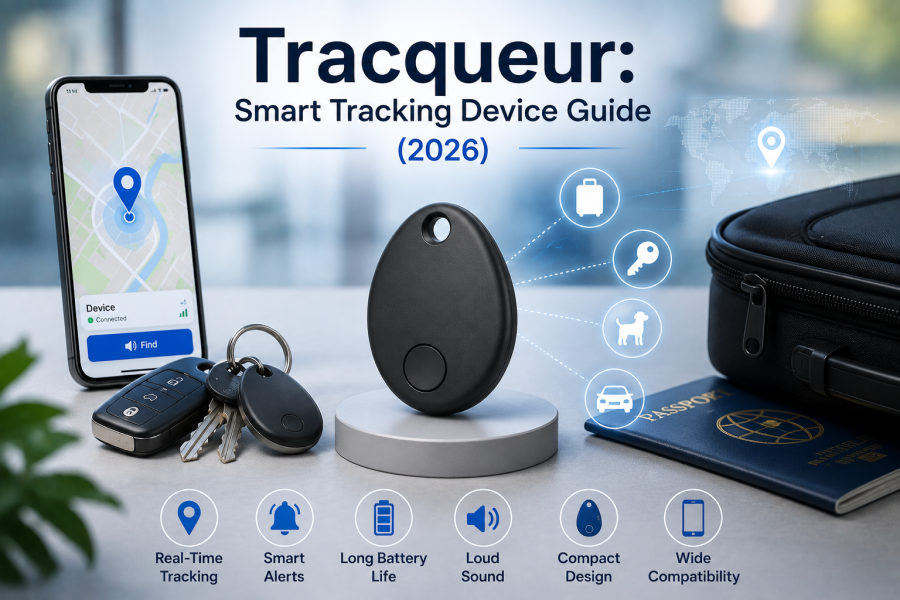
Tracqueur. That’s the word a lot of people use now for smart tracking devices — the small gadgets that help you keep an eye on things you really don’t want to lose. Some run on GPS, some on Bluetooth, some on Wi-Fi, some on a cellular signal. Whatever the tech, the job’s the same: send a location update to an app on your phone. Keys. A wallet. A backpack. A suitcase. A bike. A pet. A car, even. If you’re worried about losing it, chances are somebody’s already built a tracker for it.
They do more than just drop a pin these days, too. Separation alerts. Location history. Geofencing. Battery warnings. All of that packed into something small enough to sit on a keyring — which is a bit more control over your day than you’d expect from something that tiny.
So here’s what this covers: how Tracqueur actually works, what it can do, the different types out there, the real upsides, a few things nobody tells you upfront, and some tips for picking the right one in 2026.
What Is Tracqueur?
Basically, a Tracqueur is a small device meant to help you find or watch over things — valuables, vehicles, pets, whatever matters to you. It figures out its own location, then sends that over to an app, so you can check exactly where it is, or at least where it was last seen.
It’s not really a brand. More of a catch-all term, kind of the way people just say “a tracker” and leave it at that. Different devices run on different tech depending on what job they’re doing, so it helps to know how each one actually works before buying.
People use these on house keys, car keys, wallets, purses, backpacks, suitcases, bikes, motorcycles, cars, work vans, pets, business gear, hiking equipment. Basically anything expensive enough, or personal enough, that losing it would actually hurt.
Strip away the marketing and the appeal is simple. Less time flipping the couch cushions looking for something. More confidence that if it does go missing, you’ll actually get it back.
Why Are Smart Tracking Devices Becoming More Popular?
These used to be a fleet thing. Trucking companies. Delivery outfits. That world. Now they’re cheap enough that regular people buy them — students, travelers, parents, small business owners, basically anyone.
A few things pushed that along.
More Valuable Everyday Items
Most people carry real money around in their pockets now. Phones. Laptops. Cameras. Tablets. Lose one and it actually hurts, so a tracker starts feeling less like a toy and more like cheap insurance.
Growth of Mobile Apps
The apps got better. Genuinely easier to use. Check a location. Get an alert. Share access with someone in the family. Watch several devices from one screen. None of that felt this simple even a few years back.
Better Tracking Technology
GPS accuracy improved a lot. Bluetooth holds its connection better now. Batteries last longer. Updates come through instead of dropping at the worst possible moment.
Increased Travel
Anyone who’s flown enough knows that sinking feeling watching bags disappear down the belt at the wrong airport. Clip a tracker on the suitcase, and at least some of that anxiety goes away.
Business Asset Protection
Plenty of businesses now track vehicles, delivery gear, tools, inventory this way. Mostly for security, but also just to keep things running without so many surprises.
Add it all up and it’s not really a mystery why Tracqueur devices caught on both at home and at work.
Common Uses of Tracqueur
Part of why these keep spreading is how many different problems one small device can actually solve.
Finding Lost Keys
Clip one to the keychain. No more flipping couch cushions — just open the app.
Protecting Wallets
Tuck a small tracker inside, and if the wallet ever wanders off, getting it back stops being pure luck.
Tracking Luggage
Frequent flyers drop one inside checked baggage so they’re not standing at the carousel wondering if it even made the flight.
Monitoring Vehicles
GPS trackers let you watch a personal car, a motorcycle, a company van, or a whole delivery fleet — take your pick.
Keeping Pets Safe
Stick one on a collar, and a pet that’s slipped out the gate is a lot less of a crisis.
Managing Business Equipment
Construction crews, rental companies, delivery businesses — they lean on this constantly. Keeps expensive gear accounted for and losses down.
Outdoor Adventures
Cyclists, hikers, campers. Plenty of them just want their gear protected while they’re out somewhere with no cell signal for miles.
Different jobs call for different tech, though. Worth understanding the mechanics before picking anything.
How Does Tracqueur Work?
The exact tech changes from device to device, but underneath, most of them follow roughly the same steps. First, figure out where you are. Then, send that back to an app.
The method shifts. The goal doesn’t — help you find something, fast.
Step 1: Determining the Location
The tracker works out its own position first. GPS units grab satellite signals. Bluetooth trackers sense a nearby paired phone. Wi-Fi trackers estimate off wireless networks. Cellular trackers push data through mobile networks.
Step 2: Sending the Data
Once it knows where it is, that info heads to your phone — Bluetooth, Wi-Fi, or cellular, depending on the device.
Step 3: Viewing the Location
Inside the app: current spot, last known location, battery status, movement alerts, and on some models, a scroll-back through history.
A lot of the better ones support geofencing too — a ping the second something crosses a line you’ve drawn.
Types of Tracqueur Devices
Not every Tracqueur is built the same. What you actually need depends on what you’re tracking, and how far it tends to wander.
Bluetooth Tracqueur
Built for things that stay close. Connects straight to your phone. Works well for keys, wallets, bags, remotes, backpacks — the stuff that’s usually within arm’s reach anyway.
Cheap. Light. Quick to set up. Battery lasts a long while. The tradeoff: once you’re too far from a paired phone, the connection’s just gone.
GPS Tracqueur
Talks directly to satellites, so the coverage is nowhere near as limited as Bluetooth. Good fit for cars, motorcycles, bikes, boats, pets, anything valuable enough to worry about.
Real-time tracking. Solid accuracy. Long-distance monitoring. The catch is price — usually a subscription attached, plus heavier battery drain.
Wi-Fi Tracqueur
Leans on nearby wireless networks to sharpen indoor positioning, which is exactly where GPS tends to fall apart. Shows up a lot in homes, offices, airports, malls.
Better indoors, plays well alongside GPS. Obviously it’s only as good as whatever Wi-Fi networks happen to be nearby, though.
Cellular Tracqueur
Runs on 4G or 5G, pushing out steady updates. Businesses and fleet managers like these because coverage stretches almost anywhere there’s mobile signal. Good for company vehicles, fleets, heavy equipment, high-value assets.
Basically unlimited range. Frequent updates. Dependable monitoring. Just needs coverage — and usually a monthly fee shows up too.
Activity Tracqueur
Some wearables double as trackers while also logging steps, heart rate, sleep, calories. Not really built for finding a lost bag, but a lot of them throw in location sharing and emergency features anyway.
Key Features of Tracqueur
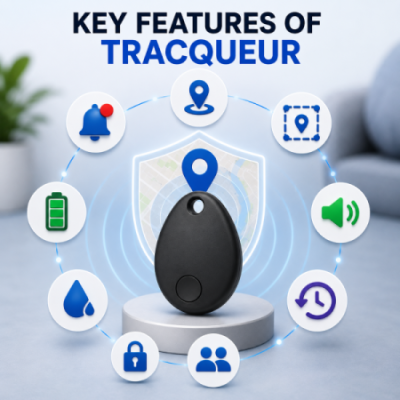
Modern trackers pack in more than “here’s a dot on a map.” Depending on the model, a handful of smart features usually come baked in.
Real-Time Location Tracking
Probably the biggest draw — seeing exactly where something is, right now. Works whether it’s a car, a suitcase, a pet, or a pallet of gear.
Geofencing
Draw a boundary. Get pinged the second the tracked item crosses it. Useful for kids, pets, company vehicles, expensive equipment.
Separation Alerts
Left a bag at the coffee shop without noticing? A separation alert flags it the moment your phone loses connection with the tracker — hopefully before you’re three blocks gone.
Location History
Some GPS trackers hold onto past routes and stops. Businesses use this to check delivery routes, review vehicle use, tighten up fleet efficiency.
Sound Alerts
Most Bluetooth trackers have a tiny speaker built in. Instead of ransacking the apartment for your keys, tap a button in the app and let it ring.
Battery Notifications
Most devices nudge you before the battery actually dies, so the tracker’s working when you need it — not dead in a drawer somewhere.
Water Resistance
Outdoor trackers usually shrug off rain, dust, general wear. Especially useful for pet collars, bike mounts, anything spending time outside.
Shared Access
Some apps let family or coworkers watch the same tracker together. Good for families, delivery teams, small businesses, shared vehicles.
Benefits of Using Tracqueur
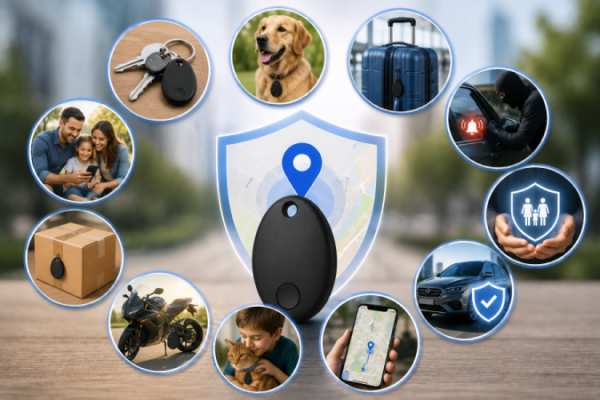
A Tracqueur isn’t only about hunting down lost stuff. It saves time, adds a bit of security, and honestly just makes the day easier — at home or running a business.
Saves Time Every Day
Searching for lost keys, a wallet, a bag — that eats real time. A tracker means checking an app instead of every room in the house, which matters more when the schedule’s already packed.
Reduces Stress
There’s something calming about just knowing where your stuff actually is, especially while traveling. Instead of wondering where the suitcase ended up, check the app, see the last reported spot.
Improves Security
GPS trackers let you watch bikes, motorcycles, vehicles, expensive equipment. Something moves when it shouldn’t, you find out fast. Worth saying, though — if something’s actually stolen, call the police. Don’t go chase it down yourself.
Supports Business Operations
Businesses lean on these for delivery vehicles, company gear, rental products, construction tools, fleet management generally. Tracking assets this way cuts losses and tightens things up.
Helps Protect Pets and Family Members
Certain wearables come with location sharing and emergency features — used a lot for pets, elderly relatives, kids, or someone traveling alone. Used responsibly, with everyone’s consent, it adds real peace of mind.
Tracqueur vs Other Tracking Solutions
People assume every tracking device works pretty much the same. They don’t. Different tech, different situations.
Tracqueur vs Bluetooth Tracker
GPS-based Tracqueur devices track long distances in real time, usually need a subscription, and suit vehicles and pets better. Bluetooth trackers cover short range only, mostly skip the subscription, and work best for keys and wallets.
Only ever losing keys around the house? Bluetooth’s fine. A vehicle or a roaming pet? GPS is the better call.
Tracqueur vs Phone Location Sharing
Phones already do location sharing. No extra hardware, easy setup, already in your pocket. But it only works if the phone’s actually with the person, it drains battery faster, and it can’t track something separate, like a bag.
A Tracqueur tracks on its own. Holds a charge longer. Works on bags, luggage, bikes, equipment — anywhere a phone just can’t be strapped.
Tracqueur vs QR Code Labels
QR labels are cheap, no battery needed at all. Problem is, they only work if someone actually finds the item and bothers scanning it. A Tracqueur reports its own location, so recovery doesn’t hinge on a stranger’s good mood.
Tracqueur vs Motion Alarms
A motion alarm just makes noise when something moves. A Tracqueur goes further — shows the location on a map, pushes the alert straight to your phone.
How to Choose the Right Tracqueur
Comes down to what you actually need, not the priciest thing on the shelf. A few questions help.
What Do You Want to Track?
Keys and wallets, Bluetooth usually. Luggage, cars, bikes — GPS fits better. Pets, either GPS or cellular, depending on how far they roam. Business equipment tends to need cellular.
Check Battery Life
Some last a few months. Others stretch past a year. Longer battery just means less fiddling with chargers down the line.
Compare Tracking Range
Nearby stuff, Bluetooth’s fine. City-wide, GPS. Nationwide, really needs cellular.
Review Subscription Costs
Some GPS trackers come with a monthly fee, a SIM card, a data plan attached. Worth working out the real cost before buying, not just the number on the box.
Verify App Compatibility
Check if the manufacturer’s app actually works well on both Android and iOS, sends decent notifications, handles multiple trackers, supports family sharing if that matters.
Look for Essential Features
The ones that actually matter: real-time tracking, geofencing, separation alerts, location history, water resistance, battery notifications, shared access, emergency SOS where it’s offered.
Common Mistakes to Avoid
Most disappointment comes down to small, avoidable stuff. Buying Bluetooth when GPS was really needed. Ignoring low-battery warnings. Installing some random unofficial app. Forgetting to test the tracker before a trip. Skipping the subscription fine print. Tucking the device somewhere GPS can’t reach. Assuming every tracker gives real-time updates when plenty just don’t.
Match the device to the job, and accuracy and reliability go up a lot.
The Future of Tracqueur
Tracking tech isn’t sitting still, and Tracqueur devices are expected to get noticeably sharper over the next few years. As GPS, Bluetooth, and AI all keep improving, expect faster updates, longer battery life, more automation.
A few trends worth watching.
AI-Powered Tracking
AI might eventually help a tracker guess where a lost item probably is, based on habits and past locations, instead of just showing a flat map.
Longer Battery Life
Battery tech keeps improving. A lot of upcoming trackers should run for years on one charge, or lean on more efficient hardware overall.
Better Indoor Positioning
Finding something inside a big building is still a pain. Future devices will probably blend Bluetooth, Wi-Fi, Ultra-Wideband, and GPS for sharper indoor accuracy.
Smarter Mobile Apps
Expect voice-controlled tracking, smarter alerts, device health monitoring, AI-based suggestions, better family sharing tools down the line.
Improved Privacy and Security
As tracking spreads, manufacturers are putting more into encryption, anti-stalking protections, privacy controls — so people can actually manage their own data.
Overall, the direction’s a good one. Better software, better hardware, better connectivity — all of it should make these devices even more useful day to day.
Final Thoughts
A Tracqueur is more than a gadget for chasing lost things. It’s a genuinely useful tool for protecting belongings, vehicles, pets, and equipment. Whether it’s a simple Bluetooth tracker for everyday items or a GPS device for long-distance monitoring, the right one saves time, cuts stress, and adds real peace of mind.
Before buying, work out what you actually want to track, how far it might travel, which features matter, battery life, subscription costs, whether the app even plays nice with your phone. Weighing all that makes landing on the right one a lot easier.
As the tech keeps moving, Tracqueur devices are only going to get more accurate and easier to live with. Getting the right one now just makes everyday life a bit simpler, while keeping the things that matter close at hand.
Share this content:










Post Comment